TDEE vs BMR – What's the Difference and Which One Should You Eat?
Ingrid Solberg · October 22, 2026
BMR is what your body burns at complete rest; TDEE is what you burn in a real day, including digestion, movement and exercise. You set calorie targets from TDEE, not BMR.
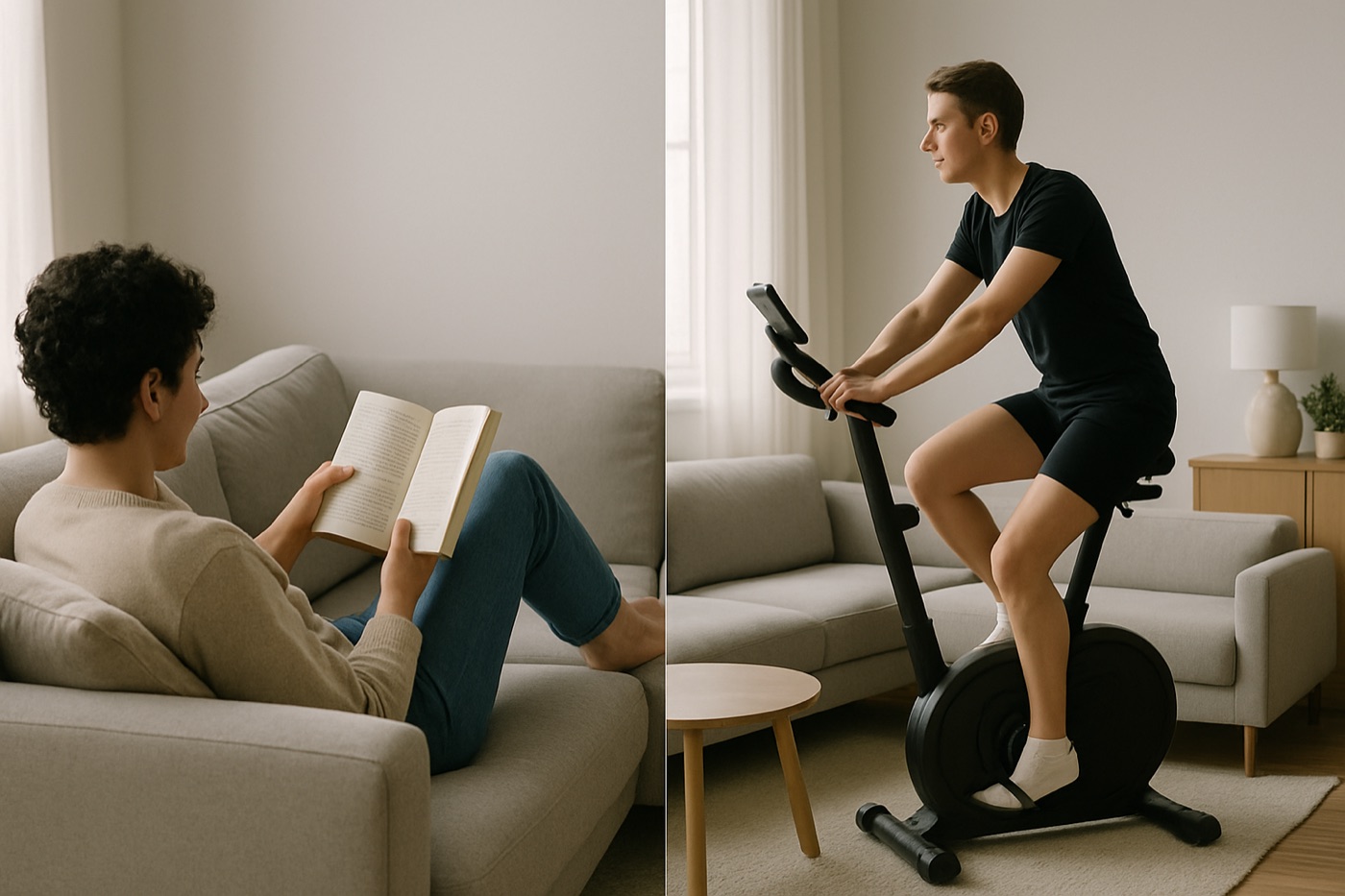
Two acronyms show up in every conversation about calories, and they are easy to mix up. Here is the difference in one line: BMR is the cost of being alive; TDEE is the cost of living your day.
BMR: the floor
Basal metabolic rate is the energy your body uses at complete rest: breathing, circulating blood, keeping warm, repairing cells. It is measured lying still, fasted, in a comfortable room, which is why it is lower than anything you burn in daily life. For most sedentary adults it is still the largest single part of daily energy use, often around 60–70%.
Our BMR calculator estimates it three ways. The Mifflin-St Jeor equation is the default:
men:   10 × weight(kg) + 6.25 × height(cm) − 5 × age + 5
women: 10 × weight(kg) + 6.25 × height(cm) − 5 × age − 161
TDEE: the real day
Total daily energy expenditure adds everything else to BMR:
- The thermic effect of food: the energy to digest and absorb meals, roughly 10% of intake.
- Non-exercise activity: walking, standing, fidgeting, chores. This varies hugely between people and is often the biggest difference between a sedentary and an active day.
- Exercise: the workouts you plan.
Calculators approximate all three with a single activity multiplier, from 1.2 (sedentary) to 1.9 (physical job plus training). Our TDEE calculator shows your result at every level.
| BMR | TDEE | |
|---|---|---|
| What it measures | Energy at complete rest | Energy over a real day |
| Includes activity? | No | Yes |
| Typical size | Lower | 1.2–1.9 × BMR |
| Use it for | Understanding your floor | Setting calorie targets |
Which number to eat to
Set targets from TDEE:
- Maintain: eat about your TDEE.
- Lose: eat below it. A deficit of roughly 500 calories a day is a common start; the calorie deficit calculator sizes it to a pace.
- Gain: eat a little above it, with enough protein.
Eating at or below BMR is usually too aggressive without supervision: it is hard to sustain and makes it difficult to meet protein and micronutrient needs.
Why your real TDEE differs from the calculator
Every TDEE number is an estimate. The best equations predict resting metabolism within about 10% for most adults, and the activity multiplier adds more uncertainty, because people tend to overestimate how active they are. The fix is empirical: log your food and your weight for a few weeks. If your weight holds steady, your average intake is your real TDEE.
That is tedious by hand, which is why we like trackers that do it for you. PlateLens’s adaptive TDEE, for example, learns your expenditure from your logged intake and weight trend and adjusts your target as it goes, so the calculator’s estimate becomes a starting point rather than a permanent guess.
FAQ
Should I eat my BMR or my TDEE?
Base your target on TDEE. Eating at TDEE maintains weight; eating somewhat below it produces weight loss. Eating at or below BMR is usually too aggressive for unsupervised dieting.
How much higher is TDEE than BMR?
Typically 20% higher for sedentary people and up to about 90% higher for very active people, which is why activity multipliers run from 1.2 to 1.9.
Does muscle increase BMR?
Yes, modestly. Lean tissue uses more energy at rest than fat tissue, so building muscle raises BMR a little, and strength training also raises TDEE through the exercise itself.